
THE FRAMES PLATFORM

Independent from the kernel upward.

Frames is not a Linux distribution and is not built on Windows. Its kernel, native userspace, FEX/FAPP application path, HelixFS work, graphical desktop and developer tooling are being developed as one independent computing platform around Nexus.

Frames symbolFrames 0.9.62 v72-r1Latest externally certified authoritative Frames baseline
12 / 12desktop phases integrated
1280×800actual QEMU framebuffer proof
70 / 70core runtime history retained
2–96SMP matrix history retained
ACTUAL GUI RUNTIME

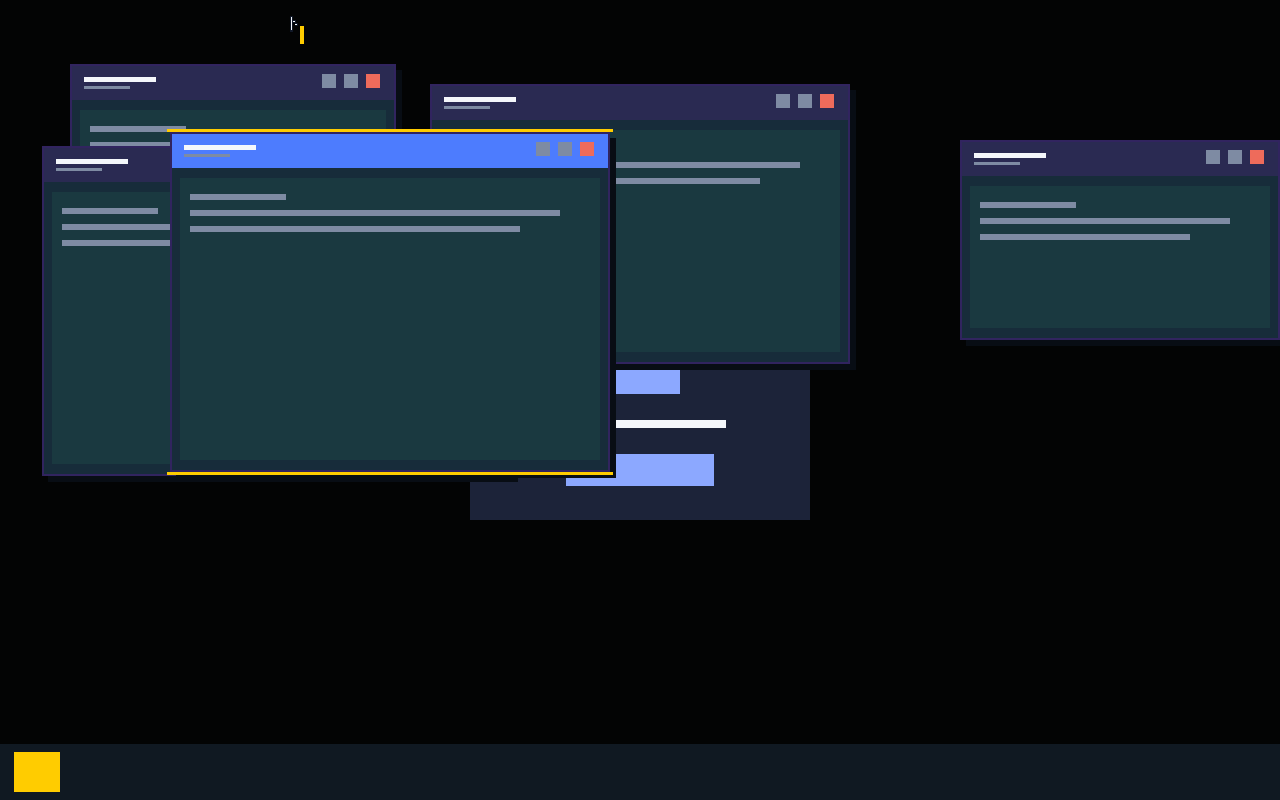
Frames now renders and runs its native desktop stack.

The 0.9.51–0.9.62 integrated GUI train moved the project from framebuffer graphics to managed windows, input routing, shell surfaces, a GUI FAPP, Files, Settings, notifications, session shell and accessibility/polish.

Actual Frames 0.9.62 QEMU framebuffer runtime capture
RUNTIME EVIDENCE · NOT CONCEPT ART

Frames 0.9.62 integrated desktop

The final external aggregate passed under workflow revision v72-r1-integrated-gui-r6, reaching the integrated desktop marker, Desktop Phase 12 and kernel-ready state. Frames 0.9.62 v72-r1 now supersedes 0.9.50 v60 as the authoritative baseline.

ARCHITECTURE

A coordinated systems stack.

Each layer is designed to move from virtual-machine proof to certified hardware without weakening the safety boundary just to reach a milestone.

06

Frames Desktop & Apps

Native desktop composition, windows, shell, GUI applications, accessibility and the future consumer experience.

05

Frames Services

Storage, networking, update, security, package, identity and device services.

04

FEX / FAPP Native Applications

Nexus-built native executables and deterministic packaged application loading.

03

Compatibility Environments

Future isolated PE/ELF compatibility at the platform edge without redefining the native core.

02

Frames Kernel

Memory, processes, scheduling, SMP, syscalls, capabilities, graphics/input ownership and drivers.

01

Hardware Layer

UEFI, ACPI, PCI, storage, USB/input, display, networking and power.

RECENT MILESTONE TRAIN

What changed after the developer console.

The public site now reflects the major implementation train instead of stopping at the early SDK milestone.

Applications · 0.9.45–0.9.47

Deterministic FAPP packaging, native packaged-application loading, continuous USB input and live process/filesystem inspection.

HelixFS · 0.9.48–0.9.50

Read-only on-disk integration, block adapter, VFS/path reads, nested traversal and deterministic multi-block file proof.

Desktop · 0.9.51–0.9.62

Graphics surface, window manager, input routing, shell, first GUI FAPP, menus/dialogs, themes/fonts/icons, Files, Settings, notifications, lock/session shell and accessibility.

PLATFORM DIRECTION

Recovery, identity and intelligence as primitives.

The long-term design is not simply another launcher and taskbar. Frames is intended to make platform-level capabilities visible and useful.

HelixFS

The next storage evolution extends beyond the current read-only integration toward transactional updates, snapshots, rollback, self-healing integrity and application/project storage domains.

Nexus SDK

Nexus SDK 6.10.0 provides the current standalone compiler/developer platform with native Frames targets, FAPP tooling, signing, interop, diagnostics and evidence workflows.

Complete SDK documentation →

Frames Voice + Identity

Future local-first speech and step-up authentication surfaces remain permission-controlled platform services rather than unrestricted kernel-level AI control.

FINAL CERTIFICATIONPASS
WORKFLOWv72-r1-integrated-gui-r6
SUPERSEDESFrames 0.9.50 v60
Evidence details
Current boundary: Frames 0.9.62 has externally certified integrated GUI runtime evidence, but Frames 1.0 is still not promoted. The next major proof is physical-hardware GUI boot and then broader persistence, recovery, hardware and release hardening.