Independent OS core
Frames owns its kernel direction, process and syscall model, hardware interfaces, services and native executable path instead of inheriting a Linux kernel underneath.

Frames is an independent operating system and developer platform being built from the kernel upward around Nexus. The goal is a coherent computing platform where the kernel, native applications, recovery, storage, security, development tools and intelligent interaction are designed to work together instead of being bolted on later.
Frames is being developed as its own operating-system platform rather than as a Linux distribution or a themed layer over another OS.
Frames owns its kernel direction, process and syscall model, hardware interfaces, services and native executable path instead of inheriting a Linux kernel underneath.
Nexus is the systems language and toolchain developed alongside Frames. Nexus SDK 6.10.0 now provides standalone build, package, signing, diagnostics and native Frames development workflows.
HelixFS is planned around snapshots, rollback, integrity and application capsules so updates, development and experimentation can become safer and easier to reverse.
Frames Voice and Frames Identity are planned as permission-controlled platform services for speech, biometric authentication and secure system interaction—not unrestricted AI control.
Frames 0.9.62 v72-r1 passed the final external integrated GUI aggregate under v72-r1-integrated-gui-r6. The desktop reached Phase 12, the kernel reached ready state, and the accepted 1280×800 framebuffer became the current authoritative runtime proof.
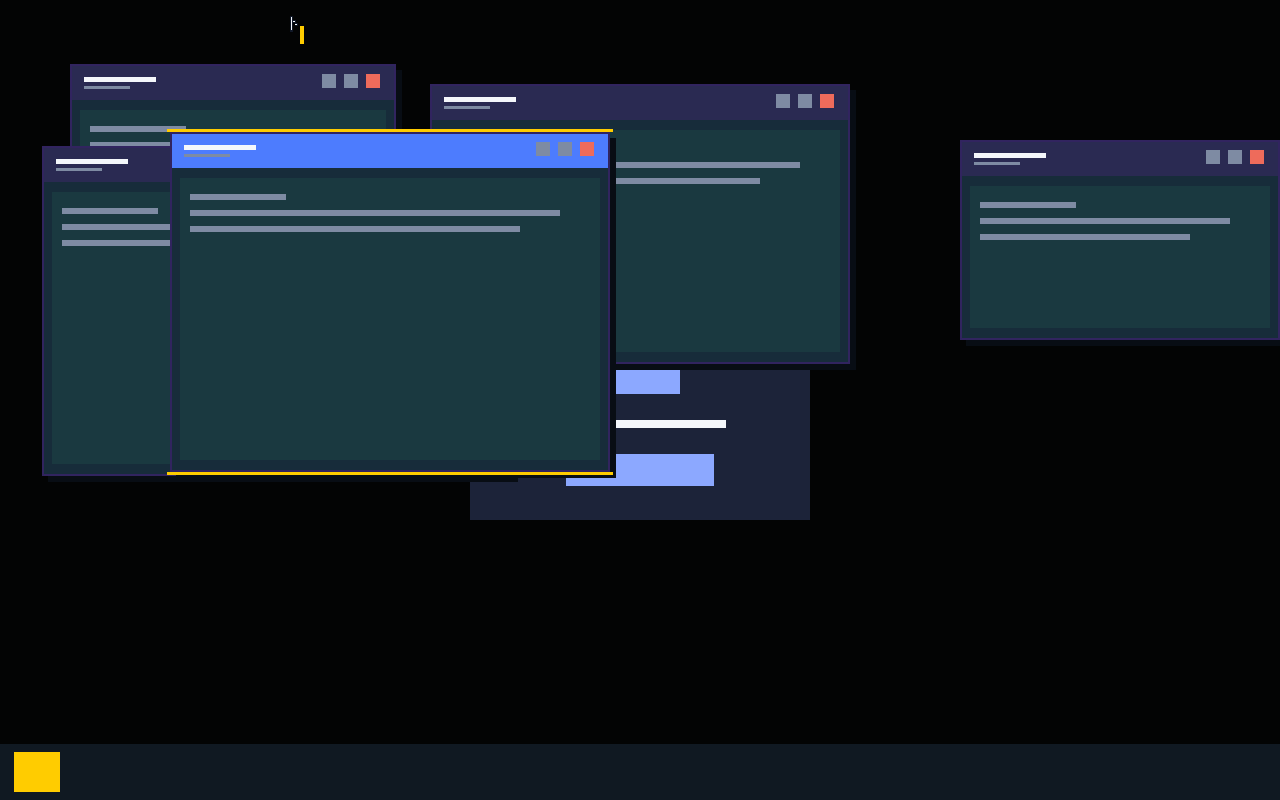
This image is runtime evidence, not concept artwork. The next validation step is a controlled physical-hardware GUI boot, initially using removable/external test media while Frames 1.0 remains unpromoted.
The runtime capture above shows what Frames actually renders today. The larger concept screens below remain design targets for the polished consumer desktop, Identity and future integrated system experience.
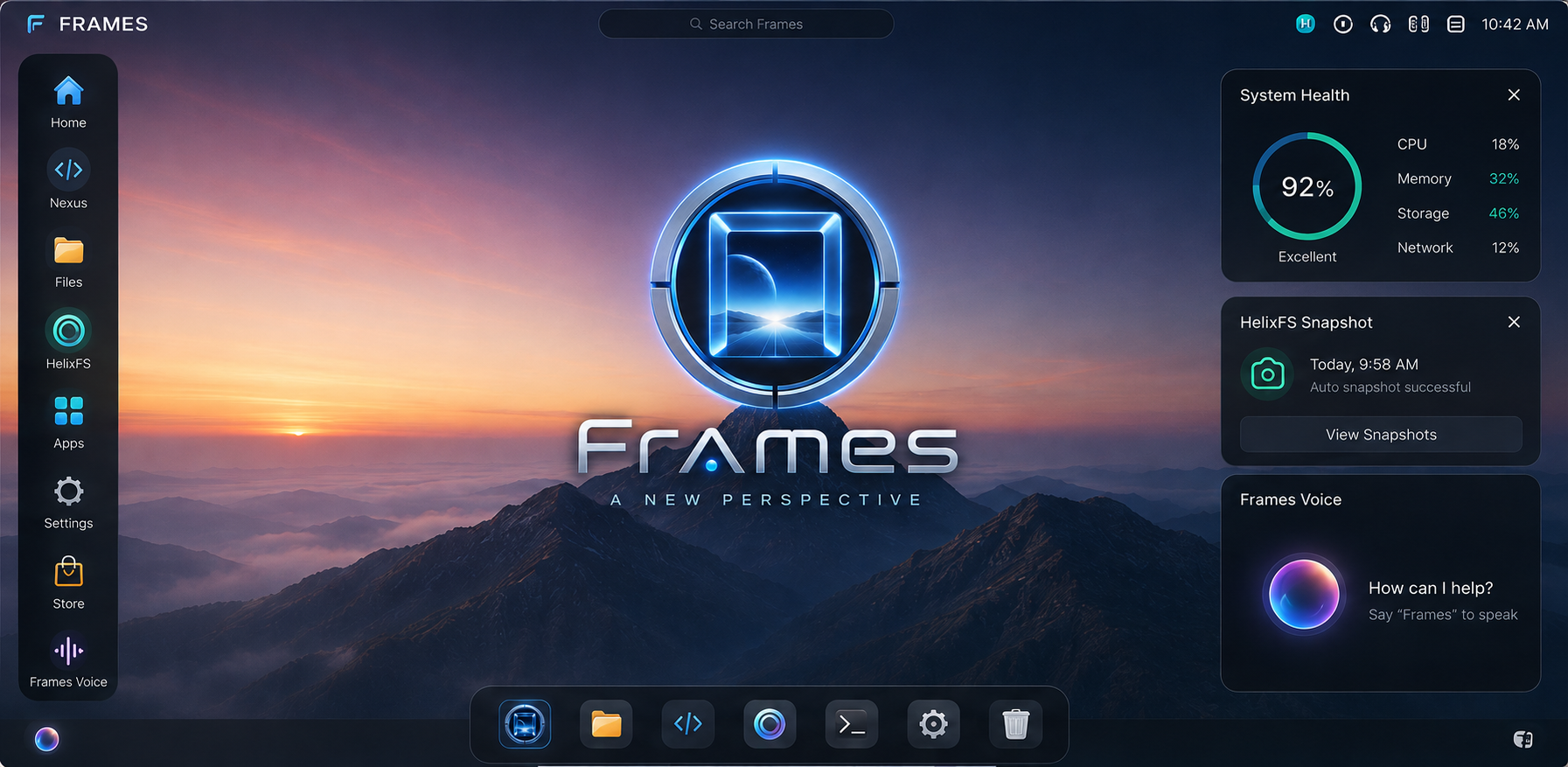
A calm, information-rich workspace with native system health, HelixFS recovery, Frames Voice, Nexus development tools and a focused dock—designed to make the operating system itself feel like one integrated product.
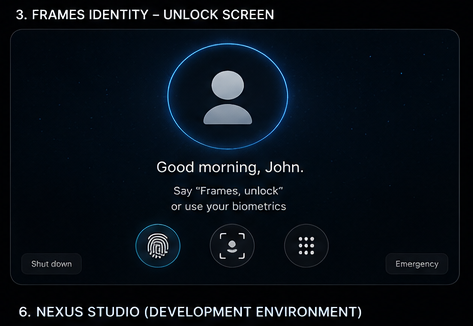
A future lock screen where voiceprint, face, fingerprint and step-up authentication can work through the Frames Identity service while keeping sensitive authentication policy local to the machine.
The current public status separates the externally proven QEMU/OVMF desktop from the still-unpromoted Frames 1.0 consumer release.
Desktop Polish, Accessibility & Integrated GUI Regression; final external certification PASS and authoritative baseline promotion.
Controlled UEFI boot on real hardware from dedicated removable/external test media.
Not promoted. Hardware breadth, persistence, recovery and release hardening still remain.
The 1.0 roadmap now treats the default first-party software suite, native hardware/input coverage and a free personal/home preview as core engineering work. Developer tooling continues in parallel, but home users should not receive an empty desktop built only for developers.
Browser, Files, Edit, Writer, Paint, Calculator, Photos, Media, Document Viewer, Terminal, Settings, Monitor, Capture, Archive, Apps and Help are now part of the 1.0 product target.
Personal/home preview use is planned to be free, expanding the number and variety of real machines that can help harden Frames before broader release.
Users choose Off, Basic or Extended diagnostics. Compatibility reports focus on hardware, crashes and performance—not personal documents or browsing history.
The long-term value of Frames comes from multiple layers being designed together rather than assembled from unrelated products.
Native systems language and Nexus SDK 6.10.0 toolchain for the kernel, FEX/FAPP applications, signing, interop and developer workflows.
Native 64-bit filesystem roadmap focused on integrity, snapshots, rollback, recovery and modern storage.
Local-first speech, conversational assistance and capability-mediated commands.
Multimodal biometric authentication, liveness checks and secure step-up authorization.
Future isolated Windows and Linux compatibility environments at the platform edge.
Future sandboxes, snapshots, debugging, profiling and reproducible test environments.
Frames began with boot, kernel, userspace, storage and certification rather than presenting a polished desktop before the underlying system existed. The next step is converting that technical foundation into an everyday home-user experience while the developer ecosystem continues to mature in parallel.
Kernel, Nexus toolchain, FEX applications and future native storage evolve together.
A free usable Home Preview can expand compatibility evidence and the installed base that gives Nexus/FAPP developers a reason to build.
Claims are gated by reproducible builds, runtime evidence and fail-closed certification.